Microsoft: hotspot-aware cooling for AI data centres
A student consulting project for Microsoft, through The Knowledge Society, on cooling AI data centres with less energy.
Cooling can use up to 40% of a data centre's energy. Standard cold plates spread coolant evenly across a chip, but AI chips heat unevenly, so most of that cooling goes where it is not needed.
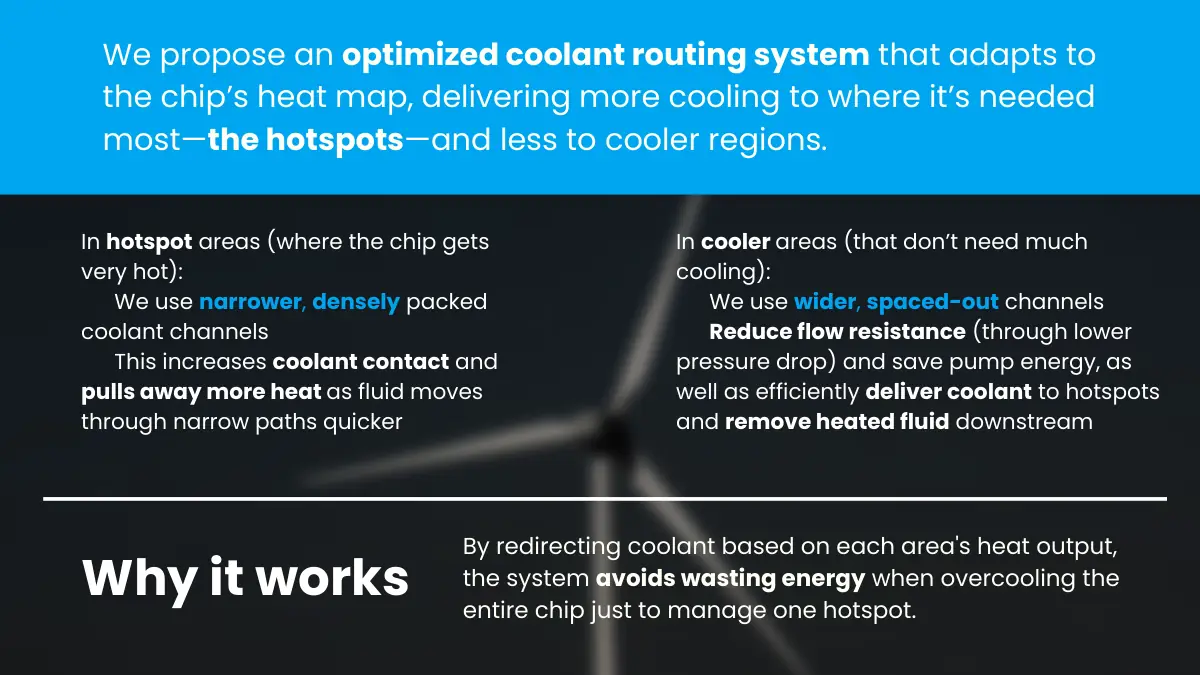
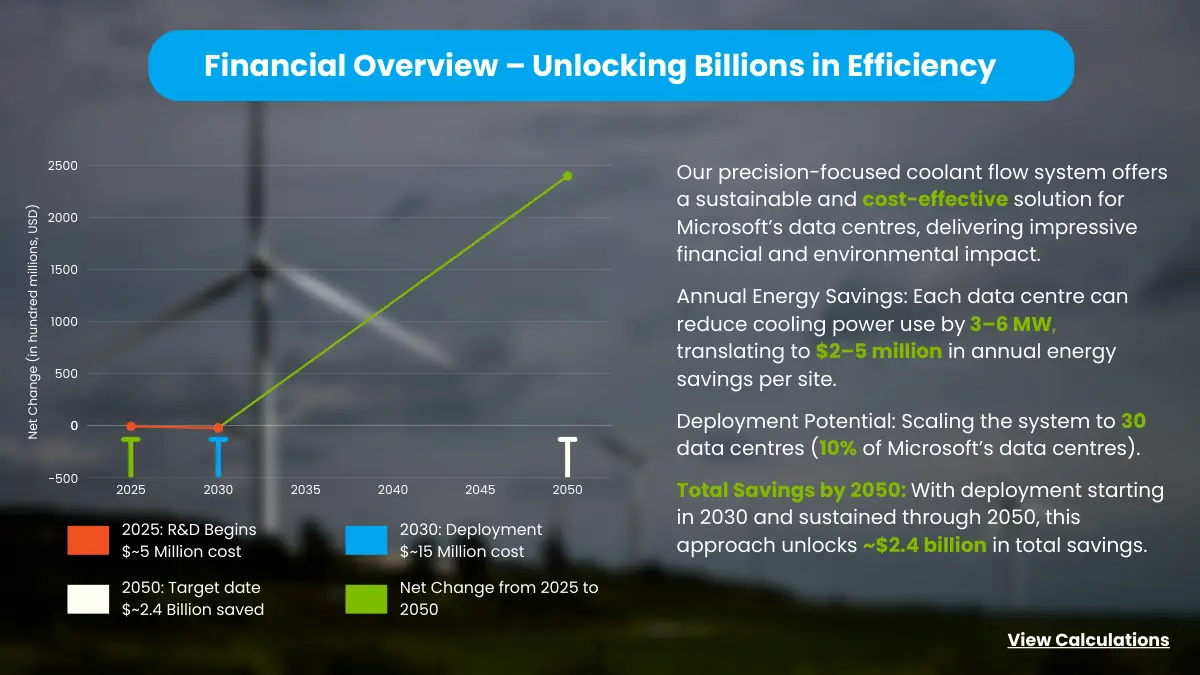
Our team of four recommended hotspot-aware cold plates. Narrow, densely packed coolant channels sit over the hottest parts of the chip and wider channels over the cooler parts. We modelled a rollout to 10% of Microsoft's data centres, 30 sites, starting in 2030, and built a simulation to show how the cooling responds as the workload moves across a chip.
Numbers
- $2.4B modelled savings by 2050
- 15 to 20% less cooling energy
- 6M+ tons of CO₂ avoided
These figures are our team's estimates from public sources, not Microsoft's own numbers.
From the deck

Have a project like this? Email me at me [at] gabrieldalton.com